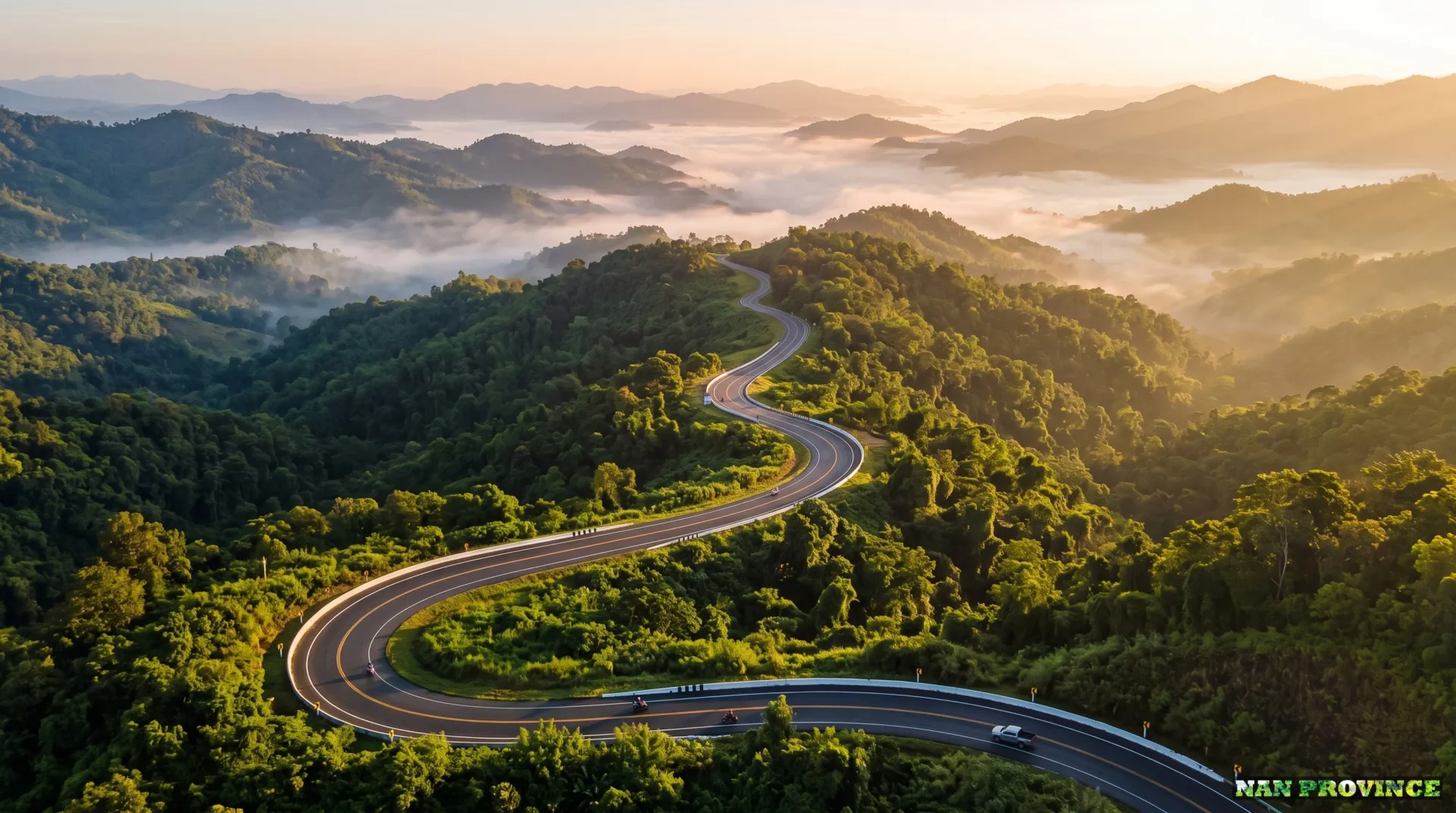
You sign the rental paperwork at Nan Nakhon Airport, pocket the keys to a cheerful silver sedan, and think to yourself, how tough can northern Thailand really be? An hour later, as Highway 1081 twists into an impossibly sharp hairpin bend along an emerald ridge, you suddenly realize that Nan does not do gentle rolling hills. Nan does dramatic, spine-tingling topography that makes Swiss mountain passes look like practice runs. With the aroma of roadside wild ginger and damp mountain mist drifting through your air vents, your heart rate doubles—not from fear, but from the raw, intoxicating thrill of open mountain asphalt.
Driving the famed loop connecting Nan Town, Pua, Doi Phu Kha National Park, and the ancient salt-wells of Bo Kluea is arguably the greatest road trip in Southeast Asia. But conquering these razor-sharp peaks without turning your vehicle’s brake pads into smoking briquettes requires a blend of local savvy, gear discipline, and a healthy dose of respect for nature. Strap in; here is everything you need to navigate Nan’s high country like a seasoned local.
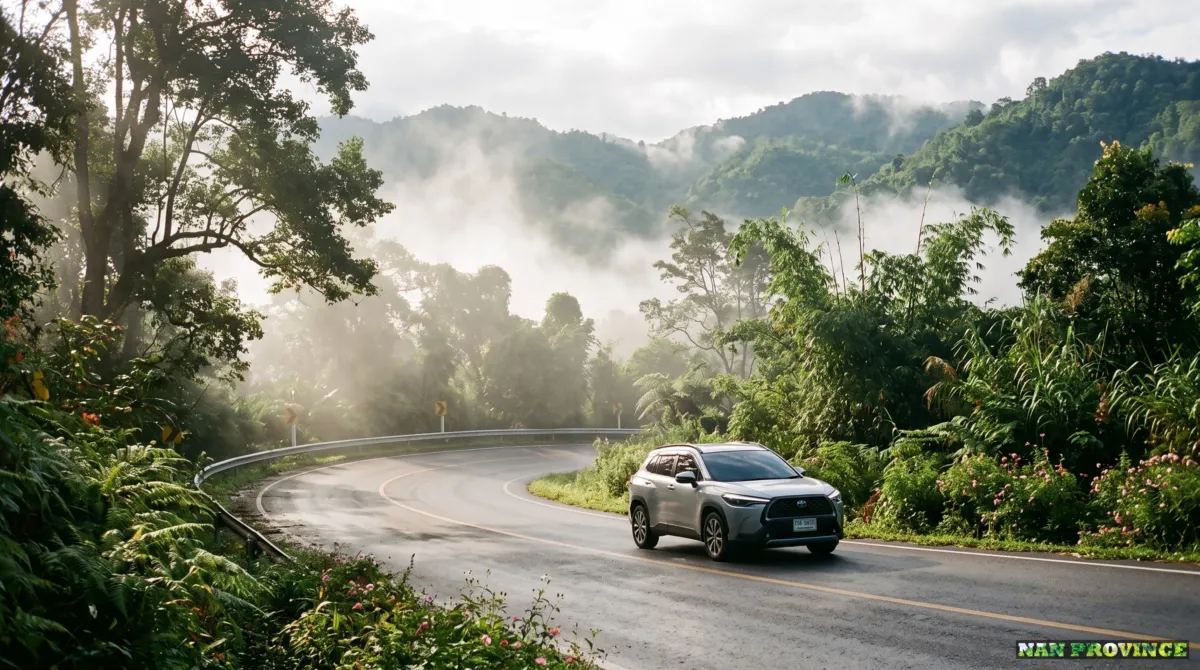
The Classic Nan Loop: Picking Your Path of Glory
Most travelers tackle the Doi Phu Kha and Bo Kluea circuit over two to three leisurely days. The standard route forms a counter-clockwise loop: heading north from Nan Town to the peaceful agricultural valley of Pua along Highway 101, climbing steeply over Doi Phu Kha via Highway 1256, dipping into the secluded valley of Bo Kluea, and returning back to Nan via the scenic Highway 1081 through Santisuk.
- Highway 1256 (Pua to Bo Kluea via Doi Phu Kha): The elevation beast. This stretch climbs rapidly past 1,700 meters above sea level. It features dizzying switchbacks, steep gradients of over 12%, and jaw-dropping vistas where sea-of-fog cloud inversions cling to the roadside cliffs.
- Highway 1081 (Bo Kluea to Santisuk & Nan Town): The postcard child. Famous for the cinematic ‘Curve 3’ (Road Number 3), this ribbon of tarmac flows over undulating ridge crests. While slightly less steep than 1256, it is packed with blind summits and tight parabolic bends that demand total focus.
Vehicle Selection: Can Your 1.2L Rental Car Make the Cut?
A burning question every traveler asks: Do I really need a 4×4 pickup, or will a 1,200cc eco-car survive? The candid truth is that thousands of modest city hatchbacks tackle these roads every month. However, your driving experience will differ drastically depending on what you rent.
- Small Sedans & Hatchbacks (1.2L – 1.5L): Perfectly fine if you travel light (1-2 passengers) and understand how to downshift manually. Turn off the A/C when climbing the steepest 15% gradients above Pua to squeeze every ounce of horsepower from the engine.
- Compact SUVs & Crossovers (1.5L Turbo or 1.8L+): The absolute sweet spot. The extra ground clearance handles unexpected potholes, and higher torque makes passing slow trucks on short uphill straightaways effortless.
- Automatic vs. Manual: 95% of rental cars in Nan are automatic. Ensure the automatic transmission has selectable low gears (labeled as L, S, B, or a +/- manual tiptronic gate). You will depend on this feature heavily.
Mountain Driving Mastery: Saving Your Brakes from Disaster
If you catch a distinct, acrid smell resembling burned plastic during your descent into Bo Kluea, congratulations: you are smelling roasted brake pads, either yours or the vehicle in front of you. Riding your foot brake continuously down an eight-kilometer 10% slope boils the hydraulic brake fluid, resulting in brake fade—where pressing the pedal to the floor does almost nothing.
1. Master the Downshift
Never coast downhill in ‘Drive’ (D) with your foot resting on the brake pedal. Slide your gear selector into ‘S’, ‘2’, or ‘L’. Listen to the engine roar as the RPM climbs; this is natural engine braking at work. The compression of the motor should hold your vehicle at a steady 30 to 45 km/h without touching the brake pedal constantly.
2. The ‘Snub Braking’ Technique
When you do need to shed excess speed before a tight curve, brake firmly for 3 to 4 seconds to drop 15–20 km/h, then release the pedal entirely. This allows the brake discs to cool in the rushing ambient mountain air between applications.
3. Respect the Blind Curve Protocol
Local agricultural trucks and vegetable pickups regularly drift across the yellow centerline to maintain momentum on uphill switchbacks. Hug the outer shoulder of your lane when approaching blind turns, tap your horn lightly during thick fog, and never attempt to overtake on double solid white lines, no matter how slow the truck ahead is crawling.
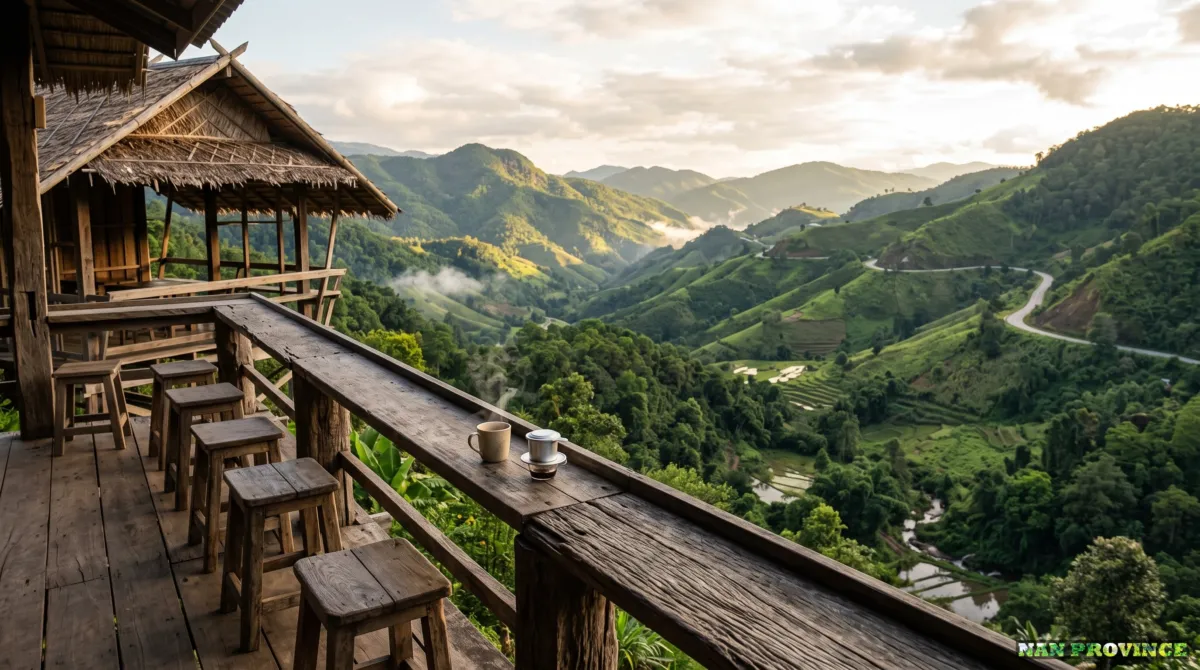
Practical Reality Checks: Surviving Nan’s High Peaks
While Nan’s infrastructure is generally well-paved, remote mountain routes introduce real-world logistical challenges that city drivers frequently overlook.
- The Fuel Desert: Fill your tank completely in Pua before beginning the ascent up Highway 1256. There are no modern service stations between Pua and Bo Kluea. Bo Kluea itself only has tiny hand-cranked village barrel pumps selling marked-up gasohol, which should only be used in true emergencies.
- Spotty Connectivity: Cellular reception drops off dramatically in the deep ravines between Doi Phu Kha viewpoint and Bo Kluea. Download your Google Maps or offline navigation apps before leaving your hotel in Pua or Nan Town.
- Morning Fog and Dew Slicks: Between November and February, morning temperatures on Doi Phu Kha drop below 10°C. Heavy condensation turns pristine asphalt slick as ice until the midday sun burns off the moisture. Cut your speed in half before 9:00 AM.
- Cash is Sovereign: Roadside viewpoint cafes, Doi Phu Kha national park entrance fees (200 THB for foreigners, 30 THB for cars), and village salt shacks rarely accept digital QR transfers due to erratic cell signals. Keep at least 1,500 THB in small banknotes tucked inside your glove compartment.
The Ultimate Reward
Self-driving through Doi Phu Kha and Bo Kluea isn’t merely a transfer from point A to point B; it is the beating heart of the Nan travel experience. Roll down the windows as you crest the ridge at 1081, breathe in the crisp, pine-scented highland air, and take your time. Nan is best savored one sweeping curve at a time.